
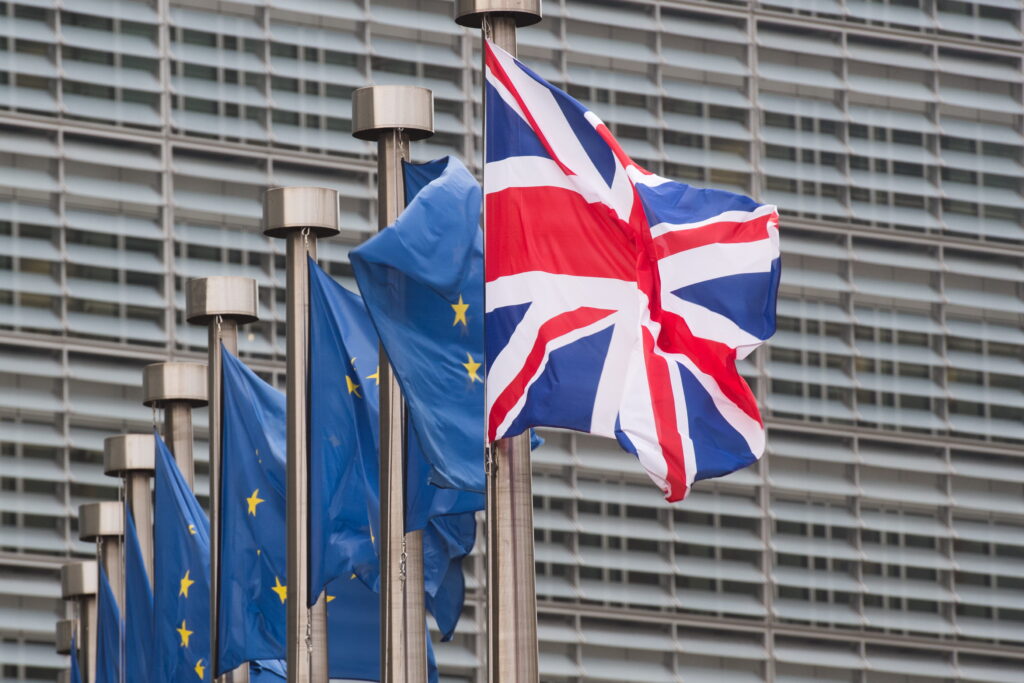
Brexit, or the UK’s departure from the EU, has put enormous and extensive impacts on global trade relations between the EU, the UK, and the world economy in general. It has been five years since Brexit, and the trade patterns remain in suspension due to emerging treaties, increasing trade barriers, and shifting geopolitics.
UK-EU Trade Relations Post-Brexit
The new UK-EU Trade Agreement of May 2025 was a landmark occasion that was intended to soften trade tension and boost business confidence. The agreement lowered the border controls and administrative burdens on plant and animal products, hoping to simplify agri-food trade. The arrangement also permitted EU fishermen to continue enjoying access to waters in the UK for 12 years, which invited a subsequent British fishers’ protest over forfeited potential revenues. These are the harvests of concessions to strengthen the trade ties after complex negotiations.
Apart from these, non-tariff trade barriers have also been a major issue. Evidence shows that additional costs and administrative complexity have reduced significantly in the amount of UK-EU trade—EU imports declined as much as 24%, and exports to the EU decreased by as much as 19%. The reduction has also had spillover effects on business investment and UK productivity in the long run, with aggregate per capita output estimated to have decreased by some 1.2%. The impacts have been sharply felt in sectors that relied on unbroken UK-EU supply chains.
Broader Economic Effects
Britain’s separation from the EU customs union and single market led to sharp and sustained reductions in trade with the EU as a share of trade with the rest of the world as UK businesses readjusted to new trading conditions in 2021 and thereafter. While uncertainty preceding formal exit made little discernible difference to trade, real institutional change imposed obstacles and costs that characterized trends in trade acutely in the wake of Brexit.
Attempts at unlocking trade through joining agreements such as the Comprehensive and Progressive Agreement for Trans-Pacific Partnership (CPTPP) and free trade agreements with countries such as India, Australia, and New Zealand have seen some recompense for loss of access to the European market. However, geographical and logistical handicaps still hinder the EU from being Britain’s biggest trading partner.
Apart from that, UK service exports, a significant part of the country’s economy, declined by 4-5% compared to pre-Brexit trends, further proving the intricacy of the disruption in trade.
Current and Future Outlook
The UK-EU trade relationship continues to be shaped by every-other-year bilateral summits to attempt to address recurring issues as well as advance coordination, e.g., in security and defense issues. Incremental reforms to new rules of trade should serve to give some normalization, yet the aggregate long-term economic impact of Brexit is generally considered a reduction in levels of trade, problems for productivity, and reorientation of the UK’s economic relations to non-European foreign markets.
Overall, Brexit has deeply remapped the geography of international trade relations of the UK. Regulatory arbitrage and successive free trade agreements will seek to reduce dislocation, but the aftereffect of higher trade frictions, reduced market access in the European setting, and allied economic adjustments will remain as core agendas in the UK’s trade geography for years to come.
This article offers a summary of major Brexit impacts on trade relationships on the basis of accurate economic facts, policy news, and industry effects up to 2025.