
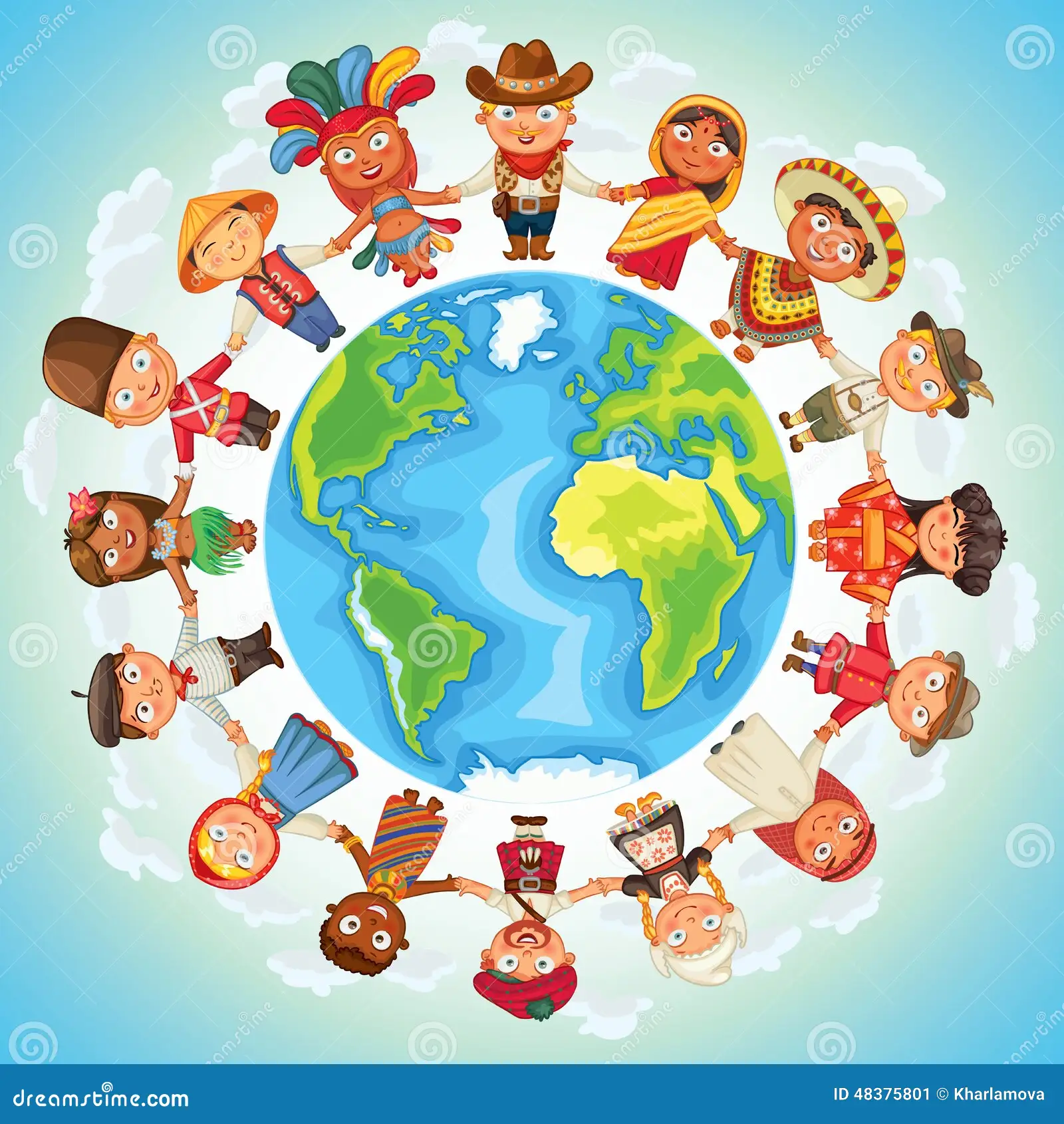
The world is not a single canvas but a vast, gorgeous tapestry consisting of billions of strands—each of them a plural culture. From breakfast until where we kiss, culture is the unseen operating system that decides the manner in which we occupy space in the world, organize society, and give meaning to life.
In order to truly be of world human experience is to be a participant in this beautiful maze of diversity.
The Visible and the Invisible
When we initially talk about world culture, our visions will always spring first to the visible:
- Custom and Ceremony: The boisterous street parades of Brazil’s Carnival, the ritualistic quiet of a traditional Japanese tea ceremony, or the erotic water-throwing festivals of Thailand’s Songkran.
- Architecture and Art: The stained glass beauty of an European cathedral, the clever stonework ornamentation of an Indian temple, or the streamlined, wind-defying curves of a Nordic dwelling.
- Fashion and Cuisine: A Vietnamese steaming pho bowl, the acrid smells of a Moroccan tagine, or the highly layered depth of an Andean poncho.
These are the beautiful, material expressions of culture—the “software” which we may see at work in the world. But the truth of cultural difference is the hidden assumptions, the unstated “hardware” upon which our values are founded.
The Silent Dimensions of Difference
Anthropologists and social scientists have built such maps of such intangible differences, which clarify why individuals with the same objectives may be attempting to realize them in a vastly different manner. One of the most striking among them is the cultural dimensions work that postulates on elementary human contradictions:
1. Individualism vs. Collectivism
This pertains to the way individuals see themselves in relation to the group.
- Individualist cultures (US, Australia) emphasize individual achievement, independence, and autonomy. The employee wants to be compensated for personal effort.
- Collectivist cultures (most of the Asian and Latin American nations) stress group welfare and loyalty (family, company, society). “We” is the self, and things tend to be done in such a way as to preserve the overall group harmony even at the cost of one desire.
2. High vs. Low Power Distance
This refers to how much a culture encourages and expects inequality and hierarchy.
- High Power Distance cultures (e.g., Mexico, India) have rigid hierarchies. Boss is boss and juniors do not challenge authority or a senior member. It is formal titles and deference to seniority that are most important.
- Low Power Distance cultures (like Denmark, Israel) favor flat structures and consultative, participative leadership. Power is function, not status, and the employees are invited to volunteer suggestions.
3. Uncertainty Avoidance
What does a culture do with ambiguity, risk, and the un-known?
- High Uncertainty Avoidance cultures (such as Japan, Greece) abhor loose situations. They prefer commanding rules, conservative preparation, and cut-and-dried procedure to rule out surprise. Change might be extremely angst-ridden.
- Low Uncertainty Avoidance cultures (such as Jamaica, Singapore) are relaxed, adaptable, and tolerant of uncertainty. They can cope with risk and have faith in improvisation rather than precise planning.
The Role of Interconnectedness
This new globalization is a world of greater cultural interaction than at any previous time. The engines of globalization—international trade, immigration, and mass electronic media—have increased the conversation among these various operating systems:
- Homogenization of Culture: Academics are concerned that there is an “international culture,” backed by Western popular culture, fast food, and the English language, to drive towards homogeneity and erase specific local cultures.
- Culture Blending: Yet globalization is also forging new, energetic cultures. A best K-Pop tune merges old Korean tunes with electronic Western beats; a restaurateur in London merges Peruvian and Japanese cuisine (Nikkei cuisine). Cultures are not merging into one another; they are merging and morphing at rocket speed.
Lastly, cultural diversity is, in UNESCO’s opinion at any particular time, “as necessary for humankind as biodiversity is for nature.” It is a treasure-house of knowledge, imagination, and creativity. Attuned to the overt showings of difference and attentive to the unvoiced voice of subaudible values, we move from stereotypical superficiality into a richer potential of communication, cooperation, and respect upon our shared planet.