
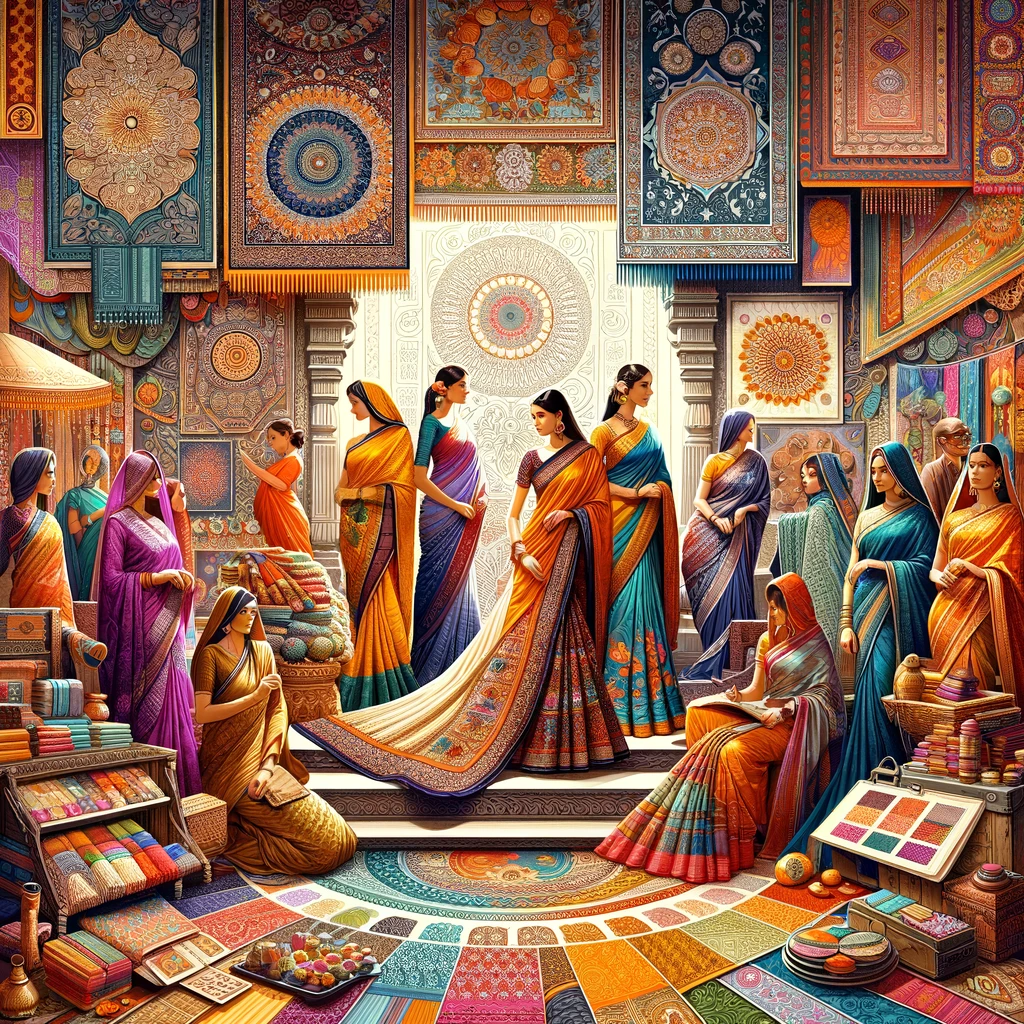
Indian textile art-from Banarasi to Kanjeevaram, and from Phulkari onward-is something more than beautiful fabrics; it represents the living embodiment of the rich cultural heritage and craft traditions of India, rooted in its history. These exquisite textiles narrate stories from the regions they come from, preserve centuries-old artisanal knowledge, and connect communities through shared cultural practices.
Banarasi: The Royal Silk of Varanasi
Intrinsically, the name Varanasi evokes Banarasi silk, which says a lot about luxury, craftsmanship, and cultural identity. It is one of the finest saris known for their intricate gold and silver zari work and has been the fabric of weddings and special occasions since time immemorial in India. Techniques of weaving are transmitted within the families in every generation to keep the artistic skills in place and sustain many livelihoods in the process. Wearing Banarasi silk is a celebration of heritage and cultural grandeur associated with northern India.
Kanjivaram: Timeless Elegance from South India
Originated in Tamil Nadu, Kanjeevaram silk sarees have been famous for their glowing colors, richness in silk texture, and elaborate temple and floral motifs. The painstaking hand-weaving requires a lot of patience combined with high expertise.
Kanjeevaram is the spiritual symbolism combined with artisanal finesse mainly applied during religious ceremonies and festivals. Keeping this art form alive preserves a part of the cultural narrative of South India.
Phulkari: The Blossoming Embroidery of Punjab Phulkari is a curious embroidery art that originates from Punjab and is marked by bright flower patterns stitched onto shawls and dupattas. It once represented womanhood, passed on as dowry and as a marker of cultural identity. Phulkari festivals of nature and bonds of relationships bring to the fore the role of women artisans as custodians of cultural transmission. Efforts at its revival ensure economic empowerment for these communities and revive an indigenous art that is fast fading.
Cultural Significance These textiles form part of our tangible heritage and continue traditions beyond the concept of craft, reflecting social hierarchies, ritual use, and regional identities. They encourage communal bonding, especially in rural societies, where knowledge would have been imparted through oral tradition and practical teaching. They might also be central to ceremonial life, holding in them local belief and history.
Challenges and Revival The specter of industrialization-a change in fashion and globalization-hangs over traditional textile arts. But revitalizing efforts that marry documentation, empowerment of artisans, sustainable fashion movements, and collaborations between designers breathe new life into such traditions. India, while nurturing the cultural and economic value of such textiles, has made sure of their continuity in these contemporary times.
Conclusion
The Banarasi, Kanjeevaram, and Phulkari are not mere fabrics; they carry the soul of India within them. Thus, it is important to preserve them for the sake of cultural diversity in this world, for the livelihoods of artisan communities, and to connect modern India with its historical roots. Indian textile arts continue to inspire continued global respect and admiration as the modern audience engages in appreciation for such traditions. I can add recent examples of revival initiatives if you want, or give insights about how these textiles influence contemporary fashion all around the globe.