
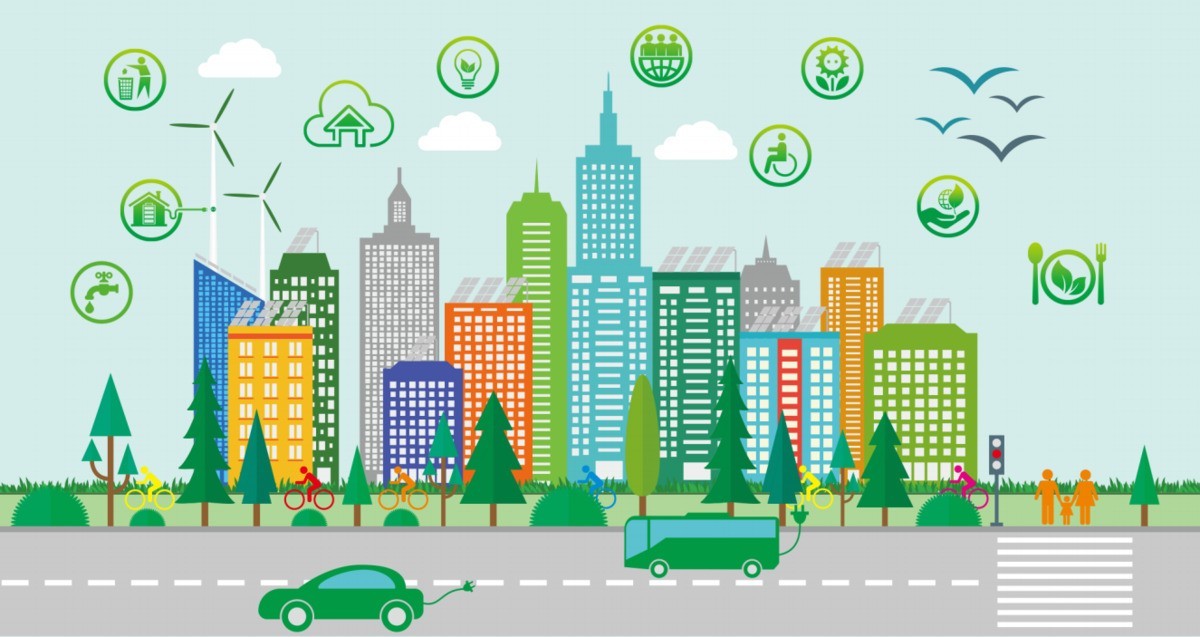
Urbanization is the defining feature of the 21st century, with over an absolute majority of the world’s population living in cities—a share to rise to 70% by 2050. This inexorable expansion contains boundless potential as much as brutal challenge to sustainable urbanization. Economic growth, social coherence, and environmental defense have to be balanced against each other in constructing resilient cities prospering in planetary boundaries.
Challenges of Urbanization
Urbanization challenges the infrastructure and services to their limit, leading to congestion, pollution, housing, transport, and inequality. The cities consume about 70% of the whole world’s energy and emit an equal quantity of greenhouse gases, with the cities being the center of the war on climate change. Urban requirements for safe water, sanitation, electricity, transport, and waste management increase and stress networks not necessarily constructed to bear such loads.
Socially, the urban poor are likely to be left behind with the poor and vulnerable outside society unless policies guarantee equal access to shelter, jobs, and services. Unchecked urbanization would further contribute to imbalances, overwhelm healthcare and education facilities, and produce degrading living conditions.
Opportunities for Sustainable Urban Development
Urbanization also speeds up economic development, innovation, and job creation through the concentration of technology, capital, and infrastructure. Productive and efficient cities increase productivity and income if properly planned. Investing in smarter infrastructure in cleaner public transport, renewable energy, and energy-saving buildings reduces carbon footprints and increases economic resilience.
Green infrastructure like urban forests, green roofs, and parks is enabled by green city planning to improve air quality, avoid stormwater, and reduce the urban heat island phenomenon. Mixed development encourages walking, reduced car dependency, and social mix by retaining workplaces and services close to residential areas.
The Role of Behaviour in Urban Sustainability
Technology and infrastructure alone are not adequate to address sustainability goals. There is a lot of research presently focused on sustainable city conduct—convenient and socially appealing too. Medellin is one of a string of cities demonstrating how bottom-up social movements quell violence and enhance levels of living through inclusive growth.
Behavioural science and social engagement modelling can make citizens active, rather than passive, recipients and urban ecosystem managers. This behavioural element is key to motivating actual change in biodiversity preservation, waste reduction and management, and energy efficiency.
Policy and Governance for Resilient Cities
Inclusive, open, and responsive municipal government is critical to sustainable development. Policy that enables participatory planning, equitable investment, and accountability builds confidence and innovation in municipal government. Linking city plans to global agendas such as the UN Sustainable Development Goals and the Global Biodiversity Framework ensures collective action for climate, equity, and economic growth.
Inclusive transition towards reducing resource intensity, local production and consumption, and protecting the poor offers the basis for resilient and sustainable urban futures.
Conclusion
Urbanization, if sustainable, possesses unparalleled ability to move beyond the limits of economic development, social justice, and environmental abundance. Resource pressure, pollution, and inequality are real issues but are capable of being addressed by smart infrastructure investment, green urban planning, behavior change, and good government.
As the world urbanizes at a 70% rate by 2050, adopting holistic, universal, and adaptive approaches will be key in the development of resilient, sustainable, and prosperous urban systems that have the potential to achieve well-being for all.