
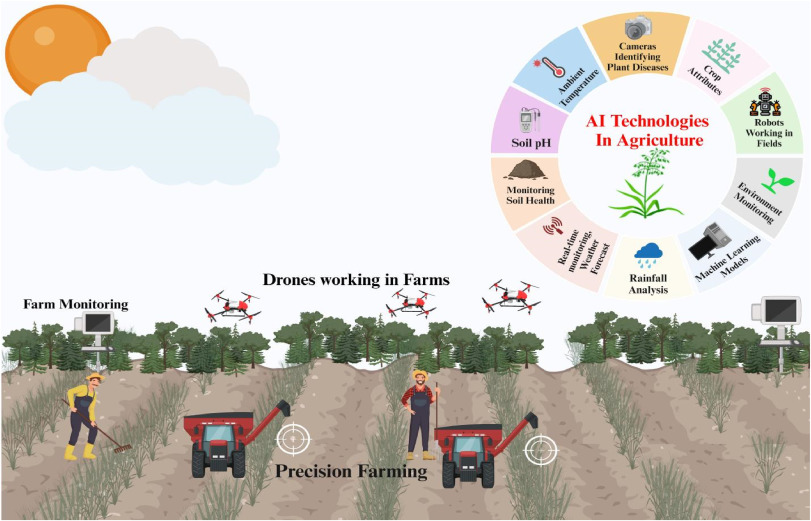
Increased uses of automation and autonomous technology in farming are reshaping the rural labour markets and economy worldwide in 2025. Autonomous robots, artificial intelligence-based machinery, and precision farming equipment are revolutionizing traditional farming, with huge economic effects through productivity and cost reduction to reshaping labour demand and rural livelihoods.
Productivity and Cost Efficiency Advances
Automation saves labor expense by doing time-consuming and repetitive work such as planting, weeding, and harvesting at a faster and better rate. Autonomous robots will reduce farmers’ labor expense by 20-30% by 2025, enabling them to efficiently handle resources, reduce wastage, and increase farm produce yield by 10-30%. Enhanced production of the type enhances food safety, profitability, and farmers’ supply chain resilience to labor shortages and demographic transition.
Remaking Rural Labor Markets
As it increases productivity through mechanization, it also remakes rural labor markets to reduce the need for unskilled and upscale employment needs for high-skilled individuals to service and maintain complex machinery effectively. The remake creates new employment opportunities in technology management, data analysis, and precision agriculture but can push rural skills shortages further in the lack of balanced reskilling and education initiatives.
Socioeconomic and Environmental Benefits
Automation promotes sustainable agriculture with best practice use of inputs such as water, fertilizers, and pesticides to realize almost zero environmental externalities in terms of runoff and soil loss. Automation accelerates agricultural productivity, allowing for more intensive farming systems and rural livelihoods maintenance. Additionally, enhanced-quality traceable farm products realizes price premia, increasing rural economic value addition.
Challenges and Policy Implications
Its widespread diffusion is countered by the very high initial cost, unequal access to technology, restrictive infrastructure, and rural poor labor substitution risks. Enabling environments supporting policymakers must be fostered to allow the initiation of the technology diffusion process, training programs, and investment in digital infrastructure in rural locales in serving a positive function.
Conclusion
Farm mechanization is a main driver of rural labor market economic transformation, increasing productivity, sustainability, and revenue and transforming existing employment trends. Advanced technologies need to be struck by inclusive policy and training of workers’ skills in order to effectively build a world rural economy by 2025 and beyond.