
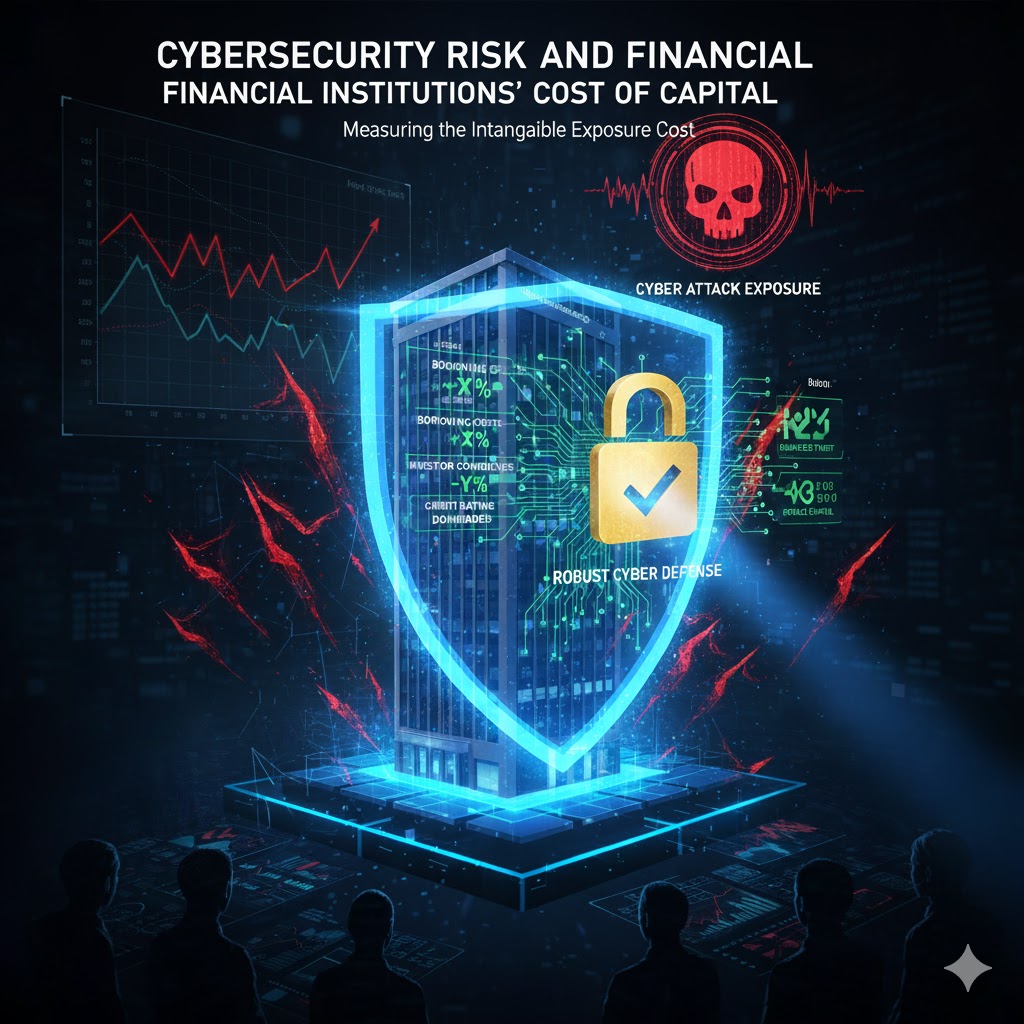
In an era dominated by data and ubiquitous connectivity, banks lead the cyber war. The game is higher than lost data or reputational damage; greater risk of cyber attacks today has a tangible and quantifiable impact on a firm’s cost of capital and investor confidence. This intangible exposure cost is rapidly becoming a key benchmark for financial health.
The Inherent Cyber Risk to the Financial Sector
Banks, investment firms, and insurance firms are especially at risk of being targeted by cyber criminals since they possess sensitive and valuable data (customer PII, banking data, investment portfolios) and provide essential services. Successful exploitation can lead to:
Direct Financial Losses: Theft of funds, system remediation cost, legal expenses, and regulatory fines.
Reputational Harm: Erosion of customer confidence, loss of market share, and adverse brand reputation.
Operational Disruption: Disruption to services impacting trading capacity, transaction processing, and business-critical operations.
In the past, such a risk was difficult to “price” within financial models. The rising frequency and severity of attacks have however compelled the market to develop vehicles to factor in cyber risk in valuations.
How Cyber Risk Drives Up the Cost of Capital
Cost of capital is the lowest acceptable rate of return by a company to pay back an investment to its capital providers (shareholders and creditors). The greater the perceived risk, the greater the cost of capital.
Cost of Debt
Credit Ratings: Rating companies (Standard & Poor’s, Moody’s, Fitch) increasingly incorporate a financial institution’s ability to manage operational risks, like cybersecurity, into their evaluation. Poor management of cyber risks will cause a downgrading, which will increase borrowing money by issuing bonds or bank loans. Creditors will demand a higher risk premium to compensate for the higher perceived volatility of earnings or losses.
Covenant Structures: Stricter covenants can be placed in debt instruments by lenders requiring more collateral or limiting certain activities should exposure to cyber risk be assessed as high.
Cost of Equity:
Stock Price Volatility: Such a company that is considered so vulnerable to cyberattacks will have its stock price volatility higher. Investors, particularly institutional investors, will demand a greater expected return to compensate for the extra risk, thereby increasing the cost of equity.
Investor Confidence: A weak security position erodes investor confidence. Investors will be willing to invest in firms with more robust cyber risk profiles or demand a “cyber-risk premium” to invest in more exposed firms. This can limit the firm from being able to access new equity capital.
Firm Valuation: The potential impact of a cyber attack on estimates of future cash flow and growth is now directly incorporated into valuation models, decreasing the estimated intrinsic value.
Quantifying Exposure: New Metrics and Methods
Measuring exactly how exposure to cyber risk impacts the cost of capital is a challenging task. But new approaches are emerging:
Cybersecurity Ratings: Similar to the existence of credit ratings, independent companies now offer objective measures of the cybersecurity position of an organization, with direct effects on investment and lending.
Integrated Risk Models: Banks are incorporating cyber risk into broader operating and capital risk management strategies, utilizing metrics like “Cyber Value-at-Risk (VaR)” or conducting “Cyber Stress Testing.”
Cyber Insurance: While not reducing inherent risk, good cyber insurance policies will cap the cost exposure of a breach and positively influence investor perception of residual risk.
Transparency and Reporting: Clear disclosure of cybersecurity plans and reporting incidents (when regulation dictates) can go some way towards maintaining investor confidence.
Conclusion
Cybersecurity is no longer an IT problem; it is an integral part of financial planning and corporate governance. For financial institutions and banks, it is not just a defensive measure to invest in good cyber security but an economic imperative that directly influences their ability to borrow money at favorable conditions. Proper valuation and management of cyber risk have emerged as one of the prime factors for long-term sustainability and success in the modern financial landscape, rendering an intangible threat real as a measurable cost of money.