
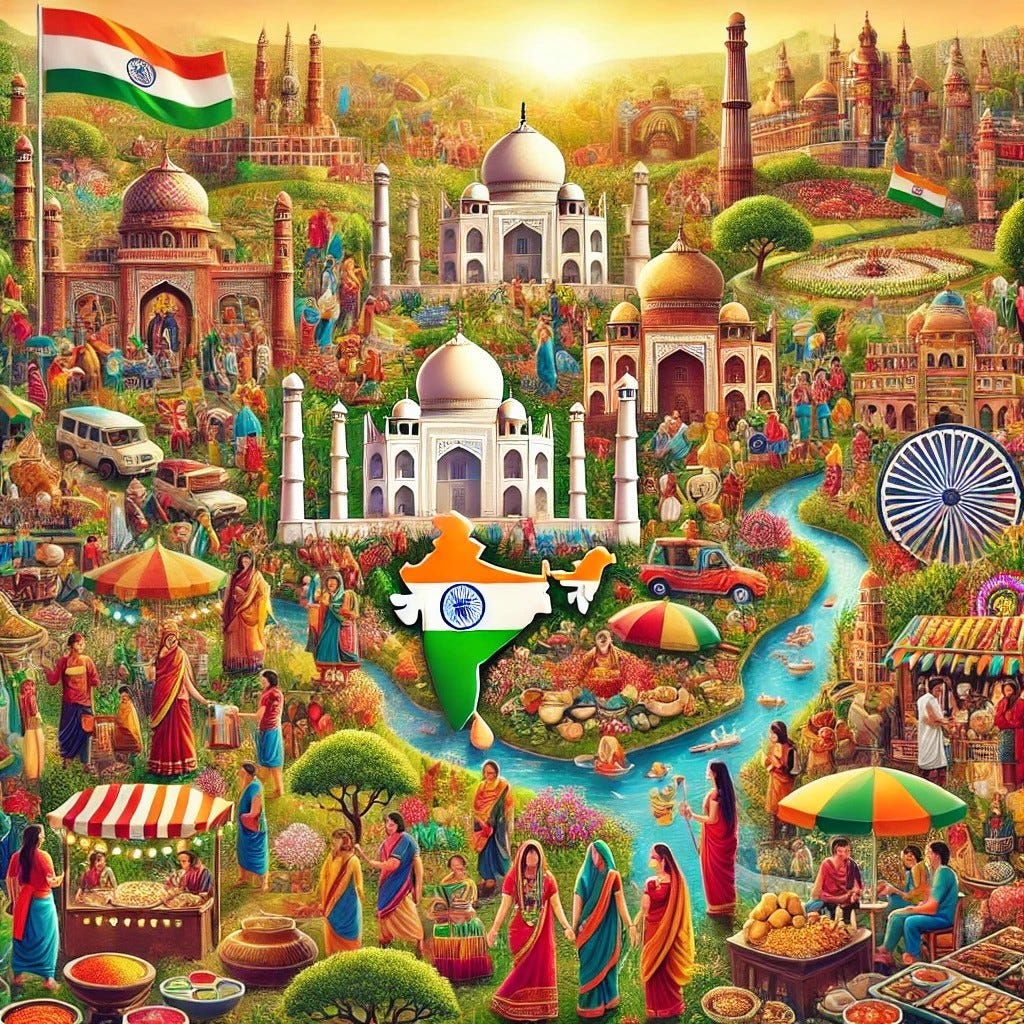
Indian culture is a multi-dimensional and rich brocade that unfolds itself away from most of the world’s cultures due to the distinctive blending of continuity, diversity, religiousness, and social values. With its ancient history of several thousand years, Indian culture has a poetic blend of tradition and virility and hence remains old yet ever-innovating.
Unity in Diversity
Another one of the most defining features of Indian culture is the philosophy of “Unity in Diversity.” Indian society has millions of languages, religions, castes, and customs coexisting in a state of balance. Unlike cultures that turn towards homogeneity, India lives on pluralism—under conquerors, traders, and colonizers adopting influences, but having an identity of their own by adapting a syncretic culture.
Family and Social Structures
Indian family is the support group of Indian society. Joint family culture also exists, where more than a single generation lives under one roof with societal healthy relations, decision-making via unanimity, and compulsory treatment of older members. All this happens in the opposite way in individual societies, where nuclear families prevail. Indian society can incorporate individual fantasies and collective obligations deeply ingrained in everyday life.
Spirituality and Philosophy
Spiritualism of Indian culture has no parallel with philosophies-based worldviews such as Dharma (duty/ethics) and Vasudhaiva Kutumbakam (“the world is one family”). Yoga, meditation, and Ayurveda place greater emphasis on overall well-being and balance. Celebrations such as Diwali, Holi, and Kumbh Mela bear witness to peace and customs in society.
Arts, Traditions, and Festivals
From classical dances of Bharatanatyam and Kathak to the rainbow-color enchantsome hues of Holi and multi-day weddings with highly ritualistic weddings, cultural expression in India is diverse and abundant. Cuisine culture, folk arts, and folklife have geography-bound practices but acquire a shared national texture.
Hospitality and Etiquette
The Atithi Devo Bhava (“Guest is God”) philosophy is Indian hospitality and fosters generosity and respectfulness in human interactions. Greetings like Namaste are the order of the day and convey respect with the pronouncement of common humanity, which reflects the country’s culture of politeness.
Conclusion
Indian culture is unique in its very high ability to absorb diversity, maintain family and community values, and cherish spiritual depth. It is an interface of traditions going back thousands of years complemented by an ability to adapt enabling living cultural heritage to coexist in re-shaping India as a nation into a cultural power that continues to captivate and inspire the world.
This intense blend of cohabitation, spirituality, and colorful traditions renders Indian culture self-sufficient in its uniqueness from the rest of the cultures and teaches us lessons of utmost importance about living together and survival.