
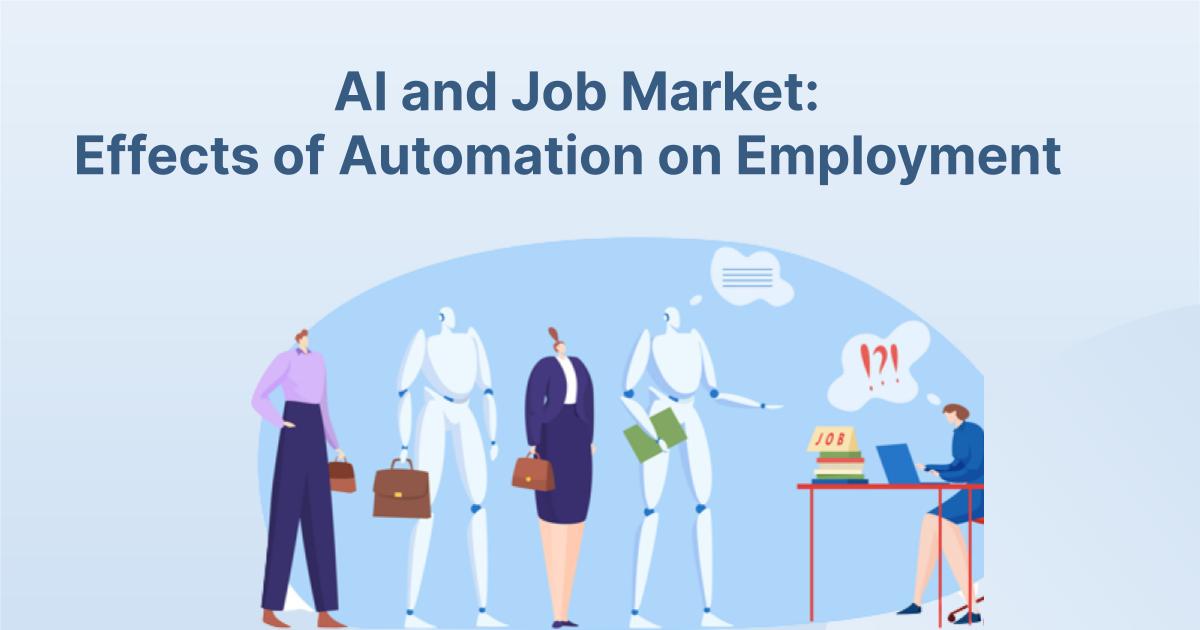
Employment Impacts of Automation
Automation technologies replace human, repetitive, and low-skilled labor with the outcome of job displacement in sectors like manufacturing, accounting, and inventory monitoring. For example, research has revealed that automation reduced employment opportunities in low-skilled sectors by mechanizing easier tasks, a trend accelerated by AI advances from 2015 to 2022.
Yet, the job loss effect is partially mitigated by the creation of work in new occupations demanding higher cognitive and social abilities. AI enhancement — as technology augments human labor instead of replacing it — promotes the emergence of new occupations and job titles in high skills sectors like data analysis, AI system operation, and problem-solving complexity.
The net employment effect is heterogeneous, industry- and region-specific. Automation reduces the employment of direct competing firms but may generate demand elsewhere due to increased productivity, leading to labor mobility between industry sectors such as technology and services. Developed and emerging economies are both found to provide support for the heterogeneous employment implication in empirical findings.
Wage Structure and Inequality Implications
Automation changes compensation patterns by their impact on occupational composition. Removing lower-skilled labor from an occupation, automation leaves behind higher-skilled and more desirable work, pushing up compensation for those occupations. Automating higher-skilled labor, however, might standardize access but reduce compensation with increased supply of lower-skilled work.
Recent research documents this pay variation effect: jobs like bookkeeping had pay rises with decreased employment as specialization labor persisted, while jobs like inventory clerks experienced pay declines as automation cut back task intricacy and increased labor competition.
These connections make ways in expanding wage gaps as high-skilled employees benefiting from automation get premiums, while low-skilled employees have stagnant or decreasing wages. Rises in minimum wages have the potential to make firms shift to automation at a quicker pace, with broader effects on wage and employment trends.
Economic and Social Implications
The varying impacts of automation call for different responses from employees, policymakers, and employers. Companies need to adjust staffing forecasts based on what is being automated—handling attrition in jobs where employment declines but pay rises, and handling recruitment and retention problems in others where pay declines.
For policymakers, it is required to foster labor transitions through reskilling, lifelong learning, and social safety nets. Encouragement of innovation favoring human capabilities and lessening inequality through inclusive labor market policies can maximize rewards and reduce threats from automation.
Conclusion
The economics of automation in 2025 is double-edged: technology replaces some types of work and upends wage patterns but also creates new work and redefines demand for skills. The net effect on wages and employment depends on what types of tasks are automated and on the capacity of firms and workers to adapt.
Effective management of this transformation requires visionary policy and strategy to enable workers’ skill upgradation, enhance fair labor market opportunities, and tap automation for shared prosperity growth. Future work will not only be shaped by the possibilities in technology but also by how society steers its adoption.
Artificial intelligence (AI) and automation of robotics revolutionizes work and compensation systems worldwide in 2025. While automation alters employment by replacing low-skill and repetitive jobs, it also generates new employment opportunities and places more focus on high-level skills, making its economic implication multifaceted and complicated.
Effect on Employment
Automation tends to reduce employment in occupations that focus on standardized, repetitive tasks. For example, bookkeeping jobs that have decreased as the majority of standardized jobs are automated. Wages of employees still in such type of jobs have increased, however, as they perform more complex, specialized work. Conversely, where automation targets the higher ranges of skills, for instance, inventory clerks, employment can increase but wages decrease because there is more competition and fewer skills required.
In addition, while automation produces the elimination of jobs in certain industries, it develops new areas of employment, more so in high-skilled professions where machine and human abilities complement one another. Empirical measures suggest a net shift towards cognitive and social ability employment, with productivity increases enabling labor reallocation across industries. Aggregate employment impact differs by industry, skill level, and location.
Wage Structure and Inequality
Automation has varying wage effects. Workers’ wages increase where they do more complicated work as less complicated work is automated. Yet, specialist labor’s wages fall with the automation of specialist labor as the job complexity lessens and labor supply increases. Such a trend is responsible for increasing wage inequality because it widen the gap between unskilled and skilled laborers’ wages.
Reports indicate that rises in the minimum level of wages also incentivize innovation in automation because businesses will attempt to cut costs by substituting more costly labor with machines, which affects directions of wages as well as demand for labor.
Economic and Social Implications
The trajectory of employment and compensation with automation requires managerial and policy response based on the type of the effect of automation—addressing attrition if employment goes down but compensation goes up or dealing with problems when compensation goes down. Policymakers need to arrange workforce shifts through reskilling, social protection, and inclusive labor market policies.
The implications of automation extend beyond the economic realm, impacting social equity and labor market conditions. To ensure that productivity gains are passed through to achieve broad-based growth, proactive policies equivalent to the magnitude of technological change are necessary.
Conclusion
The impact of automation on wages and employment in 2025 is complex, balancing job substitution by job substitution and job creation. While automation drives demand and wages for professional labor, it pressures low-skill jobs and creates wage inequality. Survival under the dynamics needs collective action by employers, policymakers, and workers towards stimulating skill building, fair outcomes, and inclusive growth in the dynamic labor market scenario.