
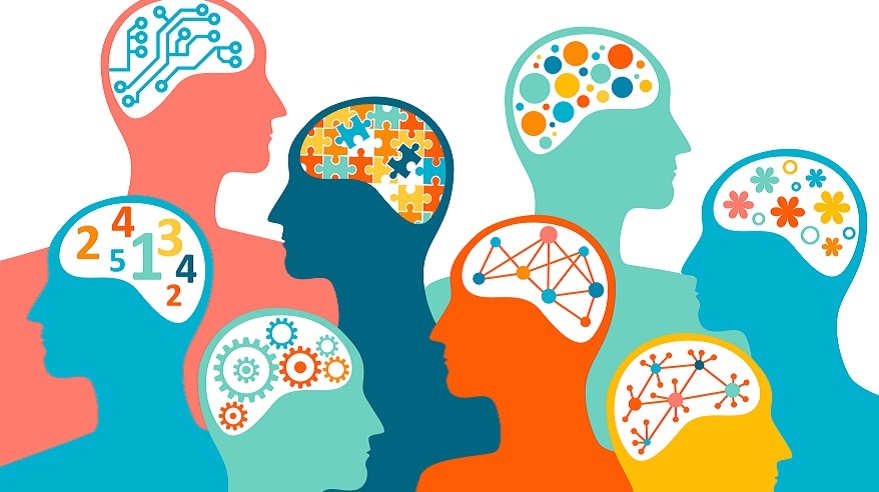
The tale of achievement, of brains, even of creativity has been bound up with an extremely constricted vision of neurotypicality for too long. Differences in the functioning of the brain—autism and ADHD, dyslexia and dyspraxia—were defined as a medical disorder, referred to as deficits to be skirted around or overcome.
And now, as the silence begins to shatter, we’re witnessing The Rise of Neurodivergent Voices—a global phenomenon in which increasing awareness and assertive self-advocacy are recasting neurological difference as a normal part of human diversity. It’s not inclusion; it’s the beauty of the distinct, and sometimes dazzling, patterns of thinking that are transforming our arts, schools, and workplaces.
Redefining the Arts: A New Creative Lens
Arts have never been a sector where the various manners of perceiving take a chance to evolve, and neurodiverse artists introduce new, valuable experiences into the mainstream culture.
- Special Talents: Autistic conditions tend to generate stunning attention to detail, pattern spotting, and systemizing—talents that express themselves in dazzling talent at painting, musical composition, and complex fiction. An example is maintaining symmetry, texture, or frequency of tone will tend to produce art that’s astoundingly complex and systematic in ways that neurotypical consumers appreciate.
- Actual Storytelling: Neurodivergent authors, writers, and comedians are presenting veteran self-narratives in actualistic, rich form. Stories like Everything’s Gonna Be Okay or films that include non-stereotypical autistic lead characters shatter outdated, harmful tropes and move toward higher, realistic portrayals. This change drives representation away from tokenism, granting world storytelling depth through means of actual internal diversity.
- Design for Accessibility: Since artists need space attuned to their sensory needs, the arts are embracing accessibility. Theaters and museums are launching “relaxed performances”—adjusting lighting, sound, and movement rules—making cultural experiences accessible to sensory sensitive people, essentially expanding audience engagement.
Redesigning Education: Focusing on Strengths
Schools centuries ago were designed around homogeneous, linear instruction—a model that inclined to punish different students. These days, attention is moving away from remediation towards optimization and strength-based learning.
- Valuing Cognitive Diversity: Teachers are coming to realize that a kid with ADHD might struggle to sit in a chair but could be a brilliant problem-solver or multi-tasking genius. Dyslexic students could be very strong in conceptual knowledge and verbal reasoning because skills that sequential, text-based assessments may not be able to assess.
- Adaptive Tools: Technology is crucial. The tools that support text-to-speech conversion, dyslexia fonts, and visual organizers are inclusive enough to support students who think differently. This removes the burden from the student to fit into an inflexible system and places the system in motion which synchronizes with the student’s natural way of thinking.
- Self-Advocacy Training: Perhaps most crucially, schools are beginning to instruct neurodivergent students in how their own minds work, what they require, and how to express this effectively to others—a survival skill outside of school.
The Neuroinclusive Workplace: Beyond Hype
Perhaps the industry most economically advanced is the job. Companies—particularly technology, finance, and defense companies—are finding that neurodiversity is a distinct competitive advantage.
- Tapping Talent: Some companies (e.g., Dell, Microsoft, and SAP) have arranged for Neurodiversity at Work programs. They recognize that autistic people excel at work that entails pattern recognition, concentration over long periods, data analysis, and remembering things in the long term. Dyspraxic employees might be able to provide creative, integrated problem-solving skills, although they might find it difficult to keep physical organization.
- Systematic Recruitment: Structured social communication puts neurodivergent applicants at a disadvantage who can be tripped up by it. Neuroinclusive recruitment processes apply functional testing, direct instructions, and formal interview skills so that candidates are able to demonstrate their actual work skills rather than being ruled out by communication style differences or reservedness.
- Reimagining Leadership: As neurodivergent workers increasingly voice themselves, they challenge more conventional, often emotionally performed, models of leadership. They demand literal communication, measurable goals, and performance-based feedback, constructing workplace cultures that are often less politicized and more hard-nosed output-oriented—benefiting all employees.
The introduction of neurodivergent perspectives is demonstrating that homogeneity is a weakness in a complex, fast-changing world. Through the deployment of a diverse processing team, organizations achieve new efficiencies, innovative solutions, and increased levels of intellectual and moral awareness.
The rise of neurodivergent narratives isn’t a fad; it’s a reformation that human intellect needs. It is the reminder that our greatest strength as a collective is not uniformity, but celebrating and accepting every unique form of thinking.